
Carbon Window Tint:
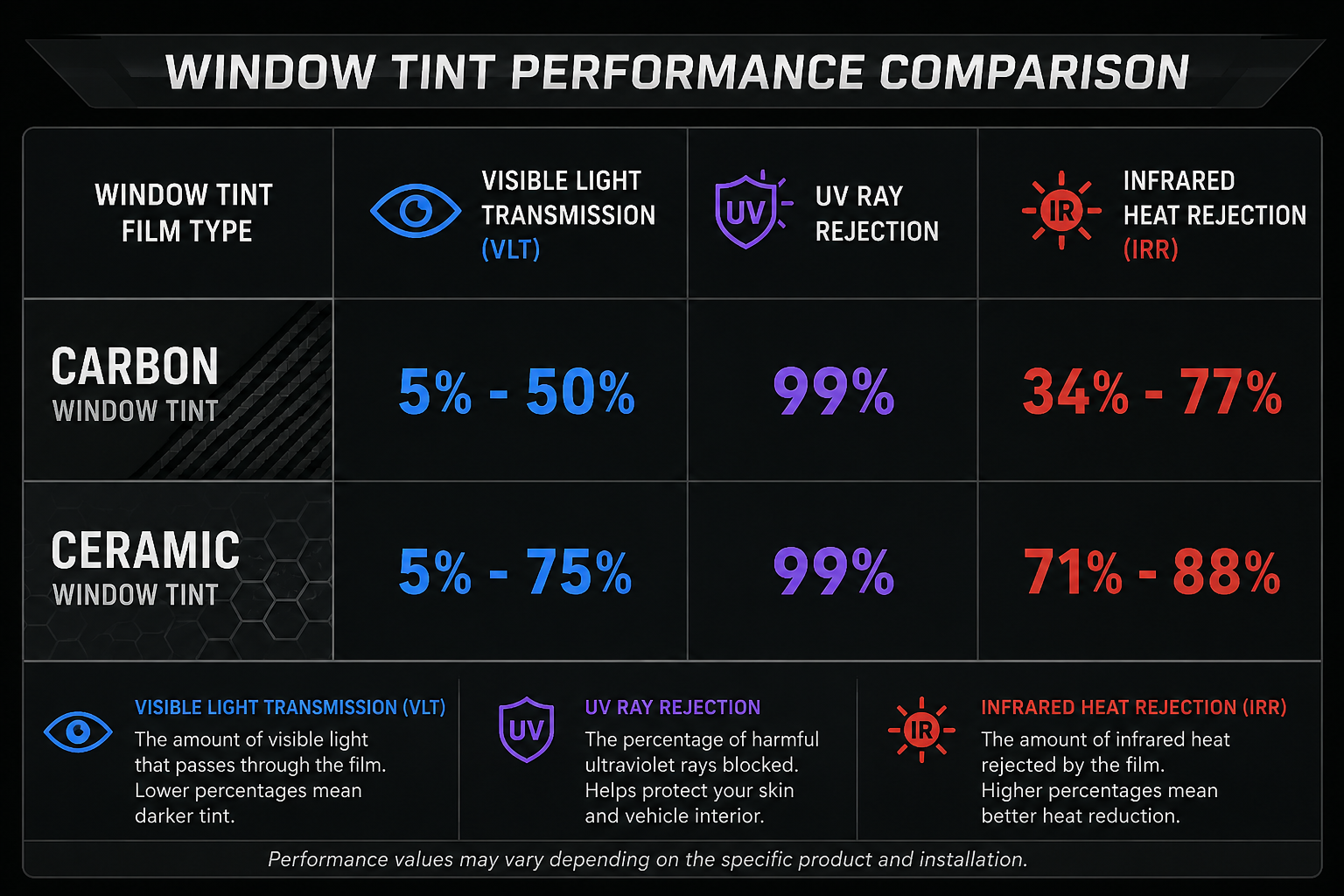
Carbon window tint is a great mid-level option for drivers who want a darker look, good privacy, and better comfort than basic dyed film. It uses carbon particles to help reduce glare and block some infrared heat.
It usually has a rich, neutral appearance and is more fade-resistant than dyed tint. Carbon tint is a good choice for customers who want an affordable upgrade without stepping into the premium ceramic price range.
Ceramic Window Tint:
Ceramic window tint is the premium option. It uses advanced ceramic technology to block more infrared heat while still maintaining clear visibility. It provides stronger heat rejection than carbon, helps keep the cabin more comfortable, and does not interfere with GPS, Bluetooth, keyless entry, or phone signals.
Ceramic tint is also highly color-stable, meaning it is designed to resist fading over time. It is ideal for customers who want the best comfort and performance.